
Neighborhoods / Miami Shores
A tree-lined villageMiami Shores
A tree-lined village with its own municipality, west of Biscayne Bay. The Barry University campus sits within its limits; the NE 2nd Avenue corridor is its small-scale commercial center. The fabric is low-rise and largely single-family.
The character of the area
Miami Shores is a village on the bay shore with its own municipality, and what stands today sits on a settlement history going back to the 1870s: the records say William H. Gleason and William H. Hunt travelled north along the bay and founded a community named Biscayne. The area was replanned in the 1920s: the plan drawn up by the Shoreland Company anticipated roughly 9,000 building sites and 5.7 miles of bay frontage. The 1926 hurricane halted the plan and the village was formally incorporated on January 2, 1932.
The charter provided for a five-member council and a village manager; the village still runs its own police force, its own library, its parks and recreation department and its building department. It is unusual in Miami for a place of this size to keep its public services inside its own limits, and it shapes daily life directly: you do not have to cross into a neighboring municipality for basic services.
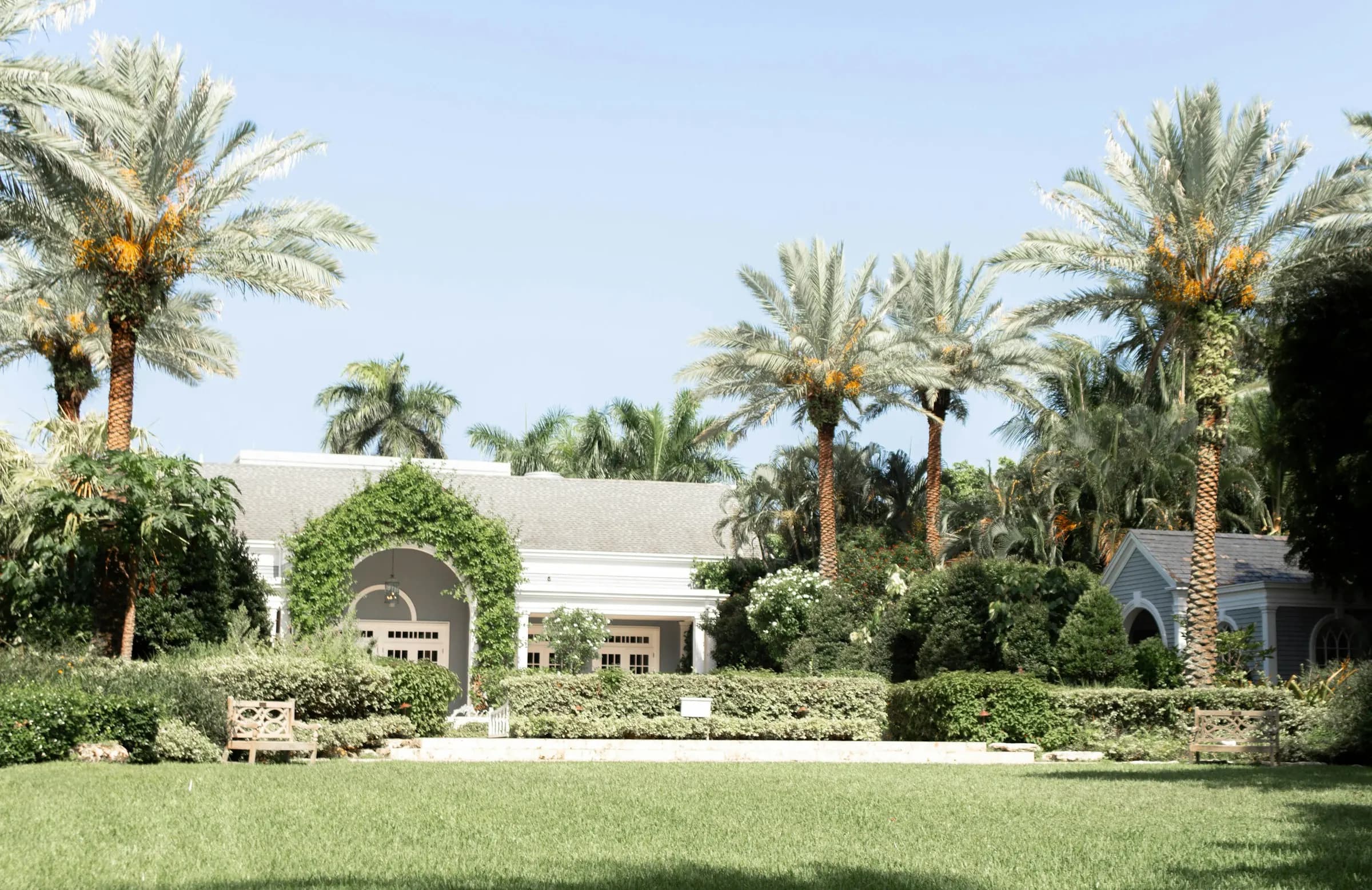
The street layout is a grid, the building stock is almost entirely low-rise, and the tree canopy closes over the streets. The village applies its own rules to building and facade changes, so the look of the stock is not left to chance. Together, those two things make the village a distinct island of calm inside the denser Miami fabric around it.
Public life is built around the village’s own facilities: the Community Center at 10050 NE 2nd Avenue runs more than forty recreation classes a week and a year-round programme in five intramural sports. The Aquatics Center at the same address has an eight-lane year-round competition pool and a seasonal aquatic playground; the tennis center is the third leg of the programme.
The Barry University campus sits within the village limits at 11300 NE 2nd Avenue and brings a year-round movement of students and faculty. The NE 2nd Avenue corridor is the village’s small-scale commercial artery: neighborhood shops rather than large retail chains. That is the basic difference between this village and communities built around a shopping mall.
Worth knowing
A significant part of the building stock is old: building age, roof and plumbing condition come up more often here than the Miami average. The village also applies its own rules to building and facade changes; a buyer planning a renovation should learn the process before purchasing.
Verifiable facts
Facts we have been able to verify one by one for Miami Shores; the source for each row is printed beside it.
The village’s own history page records that the area was founded as Biscayne in the early 1870s, replanned by the Shoreland Company in the 1920s and formally incorporated as a municipality on January 2, 1932; the plan anticipated roughly 9,000 building sites and 5.7 miles of bay frontage.
Source: Miami Shores Village — the village’s own history page
Public services including the library, parks and recreation and building work are delivered through the village’s own departments; they are not transferred to the county.
The Aquatics Center has an eight-lane year-round pool and a seasonal aquatic playground; the Community Center runs more than forty recreation classes a week and the athletics division runs year-round programmes in five intramural sports.
The village has its own police force; the department’s history page records that the unit moved to its new headquarters at 10050 NE 2nd Avenue in 1948.
The Barry University campus is listed at 11300 NE 2nd Avenue, Miami Shores 33161, inside the village limits.
Source: Barry University
Sales market in Miami Shores
- Median sale price
- $1,190,000
- Median price per ft squared
- $658
- Recorded sales
- 173
Source: recorded sales from the Miami-Dade County Property Appraiser. Arm’s-length sales only; intra-family transfers, foreclosures and other non-market transactions are excluded. Scope: the municipal boundary of Miami Shores · sales recorded between August 1, 2025 and August 1, 2026.
Neighborhood boundaries are approximated by ZIP code; parts of adjacent neighborhoods may share the same code. These figures describe recorded deed transfers, not current asking prices.
Year-over-year change is deliberately not published: in this dataset it measures the composition of what sold rather than price. We do not fill a figure we cannot measure with an estimate.
Miami Shores in the news
There is no recent news on this right now.
This section refreshes daily; verified articles published in the last 90 days appear here.
Nearby neighborhoods
Areas that border Miami Shores or share the same bayfront/boulevard line:
Frequently asked questions about Miami Shores
- What does having its own municipality change in practice?
- The village runs its own police force, library, parks and recreation department and building department, so you do not have to go to the county or a neighboring municipality for daily services. The second consequence is on the building side: facade and building changes are subject to the village’s own rules, so a buyer planning a renovation should learn that process before purchasing.
- Do I need a car?
- Inside the village, some everyday needs can be met on foot or with a short drive; the grid layout and low density make that possible. For a commute and for travel beyond the area, a car is in practice necessary. That makes the street your daily route connects to the measure worth taking when you choose an address.
- How does the university campus affect the area?
- The Barry University campus sits inside the village limits and brings a year-round movement of students and faculty. That movement gives the village liveliness, and part of the housing around the campus serves that demand. The campus address is in the sources list.
- What does the median on this page measure?
- The median in the market section is calculated for the village as a whole, not for a single postal code, and that is deliberate. The village’s postal codes overlap with its neighbors: 33138 also covers El Portal, and 33161 covers the neighboring villages to the north. A median drawn from a single code would measure not Miami Shores but that wider area.
- A new house or an old one?
- The stock is mostly old: most of the village was laid out from the 1920s onwards and many houses have been renovated while keeping their original facade. That makes a well-kept older house a strong option; in return you have to ask about roof, plumbing and moisture in more detail than a standard inspection covers. The village’s own building rules are part of that decision too.
Let us see Miami Shores in person.
You come to know an area from its streets, not from a photograph. Let us talk about which block you want to live on, and review the suitable listings — and the opportunities that have not reached a list yet — together.